


Why 90% of Households Choose the Wrong Pillow
A staggering 90% of households unknowingly choose the wrong pillow, leading to disrupted sleep, discomfort, and potential long-term health issues.
In this article, we will explore the reasons behind this phenomenon, the consequences of using the wrong pillow, and how to select.
Lack of Pillow Awareness
One of the primary reasons why so many households choose the wrong pillow is simply a lack of awareness. Many people underestimate the importance of a well-suited pillow and prioritize other aspects of their sleep environment instead. As a result, they end up selecting pillows based on arbitrary factors like price or aesthetics, rather than considering their individual sleep needs.

Choosing the Wrong Pillow: Consequences and Health Issues
Using the wrong pillow can have several negative consequences on our sleep quality and overall health:
1. Unfortunate Rest Quality: An evil-fitting cushion can prompt thrashing around, and unfortunate rest quality. It might cause neck, shoulder, and back torment, making it trying to track down an open to dozing position.
2. Misalignment of the Spine: A cushion that doesn't offer sufficient help can prompt misalignment of the spine, which can add to constant agony and inconvenience. Inappropriate spinal arrangement can likewise influence the nature of rest and leave people feeling exhausted and unrested.
3. Sensitivities and Respiratory Issues: Cushions that are not hypoallergenic or appropriately kept up with can gather dust parasites, allergens, and microbes over the long run. This can set off sensitivities, asthma, and other respiratory issues, compromising the general soundness of people.
4. Rest Problems: Some unacceptable pads can compound rest issues like rest apnea or wheezing. It might deter aviation routes or advance unfortunate breathing examples during rest, prompting aggravations in rest examples and potential well-being chances.
Selecting the Perfect Pillow
Choosing the right pillow requires careful consideration of individual sleep preferences and needs. Here are some factors to consider:
1. Rest Position: Different rest positions require shifting degrees of help. Back sleepers might profit from a medium-firm pad, while side sleepers might profit from a firm cushion to keep up with legitimate spinal arrangements. Stomach sleepers might favor a milder, compliment pad to forestall stress on the neck.
2. Pad Fillings: Different cushion fillings offer various degrees of help and solace. Adaptive padding cushions adjust to the state of the head and neck, offering amazing help. Down or plume cushions offer a rich and delicate feel. Plastic pads are tough and strong, ideal for those with sensitivities.
3. Pad Level and Space: The level or space of a cushion alludes to its thickness. It ought to keep the head and neck lined up with the spine. The ideal level relies upon individual inclinations and body type. Movable cushions or ones with fluctuating space choices can be helpful for viewing as the ideal fit.
4. Allergen Contemplations: Assuming that sensitivities or respiratory issues are a worry, settle on hypoallergenic pads that are impervious to tidy bugs and different allergens. Launderable pad covers and customary cleaning can likewise assist with keeping a perfect rest climate.

Regular Pillow Evaluation and Replacement
It's fundamental to routinely assess the state of your cushion and supplant it when vital. Over the long run, pads lose their help and collect allergens. As a basic rule, think about supplanting pads every 1 to 2 years or when they never again offer satisfactory help.
The prevalence of households using the wrong pillow is an alarming issue that affects sleep quality, comfort, and overall health. To combat this phenomenon, it's crucial to raise awareness about the importance of selecting the right pillow. By considering individual sleep preferences, sleep positions, and specific needs, individuals can make informed choices and invest in pillows that promote optimal comfort, support, and well-being. Remember, a good night's sleep starts with the right pillow.

Enigma of Loch Ness
In the case of Loch Ness, which is Scotland's second-largest loch by surface area has become one with a legend that dates them back to some medieval narratives about reports believed in fact being true regarding experiences people had while party hunting and looking for food. Though the validity of this legend has never be confirmed, Loch Ness and its mystery continues to capture the imaginations of people all over—as well as their willingness cross it off on their bucket list.Overview of Loch Ness MonsterThere is even much doubt about whether there actually are such things as the Loch Ness Monster, or 'Nessie', however the legend has endured for centuries. Tales of a monster in the loch date from about 560, when St. Columba is supposed to have seen one in the Loch Ness. But the contemporary obsession with this monster actually goes back to 1933 when a spate of sightings in Loch Ness captured international interest.The loch alone is a site of breath-taking natural grandeur. Measuring about 23 miles long, the loch reaches a depth of 788 feet, making it one of the largest fresh water bodies in Great Britain. The dark cold waters and haunting sea loch, highlands hills and castles definitely give that whole sector an air of mystique.Mysteries in Loch NessThis search for the monster has since become something of a tourist attraction and, whilst numerous expeditions have been undertaken to investigate these claims over the years; no concrete proof that Nessie is real ever seems to surface. Theories abound, from giant eels to misidentified seiches caused by natural phenomena or hoaxes. Still, the fascination persists and with 1155 official sightings to date, the legend of Loch Ness lives on.More than just the monster, Loch Ness is a virtual paradise for nature lovers. Nessie is one of the most well-known mythical creatures and has become an international phenomenon credit: The loch forms a part of (and quite distinct from) that broader Caledonian Canal system which connects bodies of water across Scotland, it is in designated areas including protected waters forming key parts for completion on the Loch Ness 360° trail, an epic "new" activity trail offering those who dare to walk, cycle or run it up to nearly 80 miles worth.More EnigmasIt is also home to a number of hidden treats that are waiting for visitors. From the ancient Inverfarigaig Pier where you can enjoy great views of Loch Ness, to Suidhe Viewpoint is one of those trekking peaks which offers intact natural surroundings. Paddle the Great Glen, canoeing is an outdoor activity available to all, young and old alike, keen sportsperson or first-timer but undoubtedly one that leaves its impression like no other.Apart from the loch itself there are waterfalls, forest and hidden lochs throughout its environs. One such hidden gem is Plodda Falls, the tallest waterfall in the area located on north side of loch. Farigaig Forest, filled with wildflowers & butterflies, also garden for red squirrels -boasts a viewing point from where to look at dramatic rocky outcrops and hidden small lochs.ConclusionFor now, while the legend of Nessie might be what brings most people here in the first place, it is the untouched beauty and patchwork history which makes Loch Ness so special. Believe in the monster or not, a trip to Loch Ness is both enthralling and unforgettable.

Skills for Car Paint Upkeep
Car paint is an important part of the appearance of the vehicle, not only beautiful, but also can play a role in protecting the body.Therefore, the correct maintenance of the car paint is very important. The following will describe in detail how to maintain the car paint methods and skills.1. Avoid wiping with hard objectsWhen stains or dirt appear on the surface of the car paint, do not use hard objects to wipe, such as ordinary rags or paper towels. Doing so can scratch the paint, causing fine scratches and damage. The correct approach is to use a soft sponge or professional car cleaning cloth to gently wipe the stain and avoid overexertion.2. Wax regularlyWaxing is one of the important steps to protect car paint. The wax can form a protective film to prevent dirt and UV light from eroding the paint. It is recommended to wax the vehicle every 3-6 months, and the specific frequency can be adjusted according to the use of the vehicle and the environment. Before waxing, ensure that the surface of the vehicle is clean and choose the appropriate car wax product.3. Avoid prolonged exposure to sunlightProlonged exposure to sunlight can cause car paint to fade and age. Therefore, try to choose a place with shade when parking, or use a shade baffle to block. If it is impossible to avoid parking outdoors for a long time, you can consider using a vehicle cover to cover the entire body to play a certain protective role.4. Repair scratches and stone hits in timeIn daily use, car paint will inevitably appear some scratches and stone impact. If these damages are not repaired in time, they will accelerate the aging and corrosion of the car paint. Therefore, timely repair of scratches and stone impact is an important part of the maintenance of car paint. For small scratches, you can use the car paint repair pen to repair; For a large area of damage, it is recommended to seek professional car repair services.

An Overall Summary of Machine Learning's Roles
Whether it's tailored content on streaming sites or self-driving cars that can melt into, say, Tehran traffic, machine learning's implications are vast and, in some cases, still not fully understood. To understand the impact fully, one must look more closely at the role machine learning is playing in our world, at its benefits, challenges, and what it may hold in future.Machine learning is, essentially, a sub-type of artificial intelligence that teaches computer systems to learn from data, recognize patterns and make decisions, all with little human intervention. However, unlike typical programs that you hand to the PC to follow, ML models learn by being given lots and lots of data. This adaptability and versatility is what makes machine learning so useful in applications where there's a large amount of data, but manual analysis would be neither feasible nor comprehensively reproducible.Consumer tech is one of the most obvious use-cases for machine learning. Companies such as Netflix, Amazon, and Spotify use ML algorithms to understand user behaviour and to provide recommended content. These solutions not only improve the user experience, but they also increase engagement and money. Likewise, virtual assistants like Siri, Alexa, and Google Assistant use a form of machine learning called natural language processing (NLP) to understand and answer human questions. The ease of use of such technologies is a testament to ML's impact on making tasks easier and more accessible.Outside of the consumer space, machine learning is transforming the world of healthcare, finance and manufacturing. ML algorithms are also employed in healthcare to diagnose diseases, forecast patient sickness, and even help discover new drugs. For example, image recognition models are able to closely and effectively analyze medical scans, helping radiologists diagnose conditions such as cancer more rapidly. In finance, machine learning ensures the industry can keep its fraud detection systems, algorithmic trading and credit scoring running optimally while diminish risks and streamline business operations. On the manufacturing front, predictive maintenance with ML prevents downtime by predicting ahead of time when equipment failure might strike.Despite its benefits, machine learning is not free of challenges. One of the main concerns is ethical consideration of discrimination in algorithms. Because ML models are trained on historical data, they can pick up biases and unfairly biased outcomes can then occur in hiring, lending, law enforcement and other areas. This problem can only be tackled by ensuring fairness in the training data, and by creating fair-aware algorithms. Moreover, the “black box” problem for some ML models, especially deep learning algorithms, has the potential to compromise transparency. When decisions are rendered by complex algorithms that the designers themselves cannot fully understand, the issue of accountability looms large.Another issue is the carbon and computational cost of training huge ML models. State-of-the-art algorithms like those that power generative AI take an unfathomable amount of data and machine power to run, meaning a huge amount of energy consumption. As interest continues to grow in more complex models, sustainable options will be essential to reduce the environmental impact of machine learning.In the future, breakthroughs in domains such as reinforcement learning and quantum computing could produce entirely new capabilities that allow machines to solve problems they currently can't. Additionally, when ML becomes combined with other disruptive technologies, including the Internet of Things (IoT), blockchain will result in new and disruptive solutions across domains. As an example, smart cities might leverage ML for optimizing traffic flow, reducing energy consumption, and enhancing public safety.In summary, machine learning is the bedrock of contemporary technological advancement with its impact being felt in all fields of life. Its potential is undeniable, but there are ethical, transparency and sustainability issues to be worked out in order to develop it in a responsible way. As we grapple with the power and prospects of ML, it is becoming increasingly apparent that the future of ML is the future of society and that society's relationship to ML will only become more inextricable. The story of machine learning is by no means finished, and the next chapters are likely to be as fantastic as any of the others.
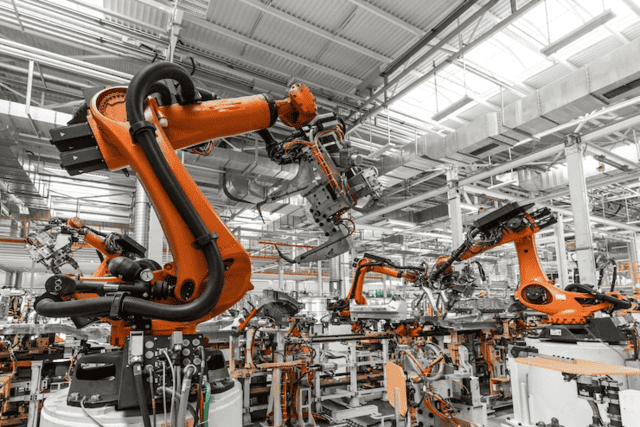
The Rise of Assembly Robots
Precision, speed, and flexibility for manufacturing leave assembly robots to the machines to perform the high-precision, repetitive movements required for simple tasks with pinpoint accuracy and blistering speed. Today, these kind of robotic systems are the staple workhorses of industry providing huge benefits over man power and are part of.Advantages of Assembly Robots1.Extraordinary PrecisionRobotic assemblers don't tire like human workers, nor do they make mistakes. The result is each piece is built to precise dimensions. This decreases defects and enhances product dependability which is crucial for applications like aerospace and medical device production. Also, robots can work 24/7, which is able to considerably increase productivity with lower cycle times.2.Cost-efficiencyWhile robots are expensive to buy and implement, the cost can be justified in terms of labor savings, waste savings and increased throughput. Furthermore, robots improve workplace safety by performing safety sensitive operations, thus reducing the number of accidents.Current ApplicationsThe assembly robot is a common feature in many different industries. Welding, bolting and attaching parts in the car industry, this job has to be done with perfect precision as millions on millions car are built within no time. Robotic machines are used by electronics manufacturers to position minuscule components on circuit boards with a precision of a micron, an assignment that is nearly impossible for human hands. In a food and beverage 3 industry, robotic arms are used to package and sort food and beverages safely while maintaining cleanliness and meeting stringent standards.There is big potential for assembly robots beyond factory production, like custom-furniture assembly and even 3D-printed construction. Collaborative robots, which are engineered to work alongside humans, are becoming more popular in shops where flexibility and usability are important.Selecting the Most Suitable Assembly RobotFirst, manufacturers need to consider the necessary payload and range of motion, smaller robots work well for delicate tasks such as electronics assembly, whereas larger robots are typically used for heavy-duty tasks. Both are also important and the faster robot is good for high-product production while a slower, more accurate robot is better for detailed work.Programming flexibility is another factor. Other robots follow pre-written commands, and some also rely on AI and machine learning to adjust to real-time variability. They should also check out possible integration with available machines and software. Finally, the budget and anticipated return-of-investment are also deciding factors.The Future of Assembly RobotsThe future for automation in assembly robotics is well on track for revolutionary trends. With the emergence of AI and IoT, the robotics will become smarter as they will be able to perform preventive maintenance and self-optimization. Improved gripper tech and tactile sensors will mean robots are dealing with delicate or asymmetrical objects better.One of the other exciting trends is the emergence of mobile assembly robotics that can move around the factory floor without human intervention, dynamically reconfiguring their jobs based on changing production requirements. Moreover, as robotics continue to decrease in cost, small and medium sized businesses will begin to implement automation, putting advanced manufacturing technologies in the hands of more and more people.Eventually, fully autonomous smart factories might be the standard and robots talk to each other, self-optimize production processes and are employed to the least degree possible. As sustainability becomes a key priority, energy-efficient robots running on renewable sources of energy will continue lowering the ecological impact of production.ConclusionAssembly robots are changing the face of modern manufacturing through the relentless pursuit of precision, throughput, and safety. They are used in various fields, from the automotive industry to computer electronics, and can do more and more since technical progress is made. Companies have to consider several important factors in order to find the robot that suits their application best. In the long term, AI-enabled adaptive robotics will open even more doors to a new industrial era both smarter and more automated. Those machines are not only going to grow production, they're going to completely recast the very definition of what work even means in the manufacturing sector.

Getting a Personal Loan: Tips and Steps
A personal loan can serve as an effective financial tool for a wide range of purposes. But getting a personal loan means being well-prepared and knowing how to go about it. Here's a walkthrough of how to get a personal loan.1.Assess Your Current Financial StandingWhether you should decide to take out a personal loan or not, first consider your financial standing. Determine how much you'll need and, if you can afford the monthly payments, examine your credit score, one of the most influential pieces of information the lender will weigh when reviewing your loan application and setting the interest rate you'll pay. Generally speaking, the better credit scores allow you to receive better terms for the loan.2.Research LendersPersonal loans are offered by several lenders, from banks and credit unions to online lenders. They each have varying terms, interest rates and eligibility requirements. Compare lenders to find the best mortgage for you. Visit ratings and reviews to see how well they are reputed and how they treat their customers.3.Things to Check for EligibilityEligibility factors, such as a minimum credit score, income level, employment history and so on, vary by lender. You must meet these requirements to qualify to apply. Part of approving a lender and depending on them is maintaining a debt-to-income ratio (DTI), which calculates your monthly debt payments as a percentage of your monthly income.4.Documentation RequiredYou have to provide and offer various documents while applying for a personal loan like proof of identity (license or passport), proof of income (pay stubs or tax returns), and proof of residence (bills or lease agreement). Getting all these documentations ready can shorten the process when you are applying.5.Submit Your ApplicationAfter you select a lender and compile all your supporting documentation, you can apply for a loan. Frequently, this can even be done online, making the process simple and fast. You should be ready to answer detailed questions about your financial situation, employment and the reason for the loan.6.Review Loan OffersAfter you submit your application, you may get several loan offers. Take time to compare each offer, including the interest rate, loan term, monthly payment amount, and any fees (such as origination fees or prepayment penalties). Try a loan calculator to determine the overall cost of the loan over the length of the loan term.7.Accept the Loan and Get the MoneyAfter you determine which loan offer is best for you, you will have to formally accept it. Once the lender is satisfied with the outcome and result of underwriting, it will issue a loan agreement for the consumer to sign. Once a consumer has accepted the terms, they ought to read through the agreement thoroughly before signing. Once the agreement has been signed, the funds are usually paid out to your bank account within a few days.8.Repay the LoanBe sure to pay your monthly payments on time to ensure you do not incur late fees and negatively impact your credit score. Automating payments may help you never forget a due date. Paying it ahead if it's possible, so you can save on paying interests, and decline the year of the loan and then save very much.In summary, a personal loan can generally be gotten and obtained in the above mentioned steps, from evaluating your financial status to paying the loan back. Make sure to borrow responsibly and only with an amount you can make repayments for comfortably to stay on track with your finances.