


Studies Indicate Nearly Two-thirds of Baby Food Tested Fail to Meet Basic Health Standards
In recent years, there has been growing concern over the nutritional quality of baby foods available in supermarkets. A significant number of studies have revealed that nearly two-thirds of these products are unhealthy, raising serious questions about the health and well-being of infants and toddlers. This article delves into the reasons behind this alarming statistic and examines the ingredients that make these baby foods unhealthy.

The Problem with Supermarket Baby Foods
The primary issue with supermarket baby foods is their nutritional composition. Many of these products are high in sugar, salt, and unhealthy fats, while being low in essential nutrients such as vitamins, minerals, and fiber. This imbalance can have detrimental effects on a child's developing body and brain, potentially leading to long-term health issues.

High Sugar Content
One of the most concerning aspects of supermarket baby foods is their high sugar content. Many products contain added sugars, which are not only unnecessary for infants but can also contribute to obesity, dental decay, and other health problems. According to a study by the World Health Organization (WHO), infants should consume no more than 5% of their daily calories from free sugars, yet many baby foods exceed this limit. The sugar content in these products often comes from sources such as fruit concentrates, syrups, and even hidden sugars in flavored yogurts and cereals. While natural sugars from fruits are generally acceptable, the added sugars in these products can lead to a preference for sweet foods later in life, making it harder for children to develop healthy eating habits.

Excessive Salt
Another major issue with supermarket baby foods is their high salt content. Infants have a much lower tolerance for salt than adults, and excessive salt intake can lead to high blood pressure, kidney damage, and other health problems. The American Academy of Pediatrics (AAP) recommends that infants consume no more than 1 gram of salt per day, but many baby foods contain significantly more. Salt is often added to baby foods to enhance flavor, but this practice can have serious consequences. In addition to the health risks associated with high salt intake, it can also mask the natural flavors of the ingredients, making it harder for children to develop a taste for healthy, whole foods.

Unhealthy Fats
Many supermarket baby foods also contain unhealthy fats, such as trans fats and saturated fats. These fats can increase the risk of heart disease, obesity, and other health problems. While some fat is essential for a child's growth and development, the type of fat is crucial. Healthy fats, such as those found in avocados, nuts, and olive oil, are important for brain development and overall health. Unfortunately, many baby foods contain unhealthy fats from sources such as palm oil, hydrogenated oils, and animal fats. These fats can contribute to inflammation, insulin resistance, and other metabolic issues, making it essential to choose baby foods that are low in unhealthy fats and high in healthy fats.

Lack of Essential Nutrients
In addition to the high sugar, salt, and unhealthy fat content, many supermarket baby foods are also lacking in essential nutrients. These products often contain low levels of vitamins, minerals, and fiber, which are crucial for a child's growth and development. For example, many baby cereals are fortified with iron, but they may be low in other essential nutrients such as calcium, vitamin D, and omega-3 fatty acids. The lack of essential nutrients in these products can lead to deficiencies that may affect a child's physical and cognitive development. It is important for parents to choose baby foods that are rich in a variety of nutrients to ensure that their child is getting the necessary building blocks for a healthy life.
Conclusion
The fact that nearly two-thirds of supermarket baby foods are unhealthy is a cause for concern. The high sugar, salt, and unhealthy fat content, combined with the lack of essential nutrients, can have serious consequences for a child's health. Parents should be vigilant when selecting baby foods, opting for products that are low in sugar, salt, and unhealthy fats, and high in essential nutrients.

Is It Illegal to Post a "For Sale" Sign in a Car?
First, we need to understand the background to this regulation. With the increasingly strict urban traffic management and the standardization of vehicle management, some places begin to pay attention to the cleanliness and unity of vehicle appearance. In this context, placing private signs or advertisements on Windows or car bodies is considered a disturbance to public order and is therefore included in the category of violations.So, how exactly is this rule enforced? According to the relevant regulations, any unauthorized postingor painting of advertisements or signs on vehicles will be considered illegal. This means that neither individuals nor businesses can post "for sale" signs in prominent locations such as car windows and car bodies. The implementation of this regulation covers private cars, taxis, trucks and other types of vehicles.The response to this regulation varies among different groups of people. Some owners and used car dealers say they sell their vehicles quickly by posting "for sale" signs, which is a proven practice. Now this regulation has left them feeling confused about how to legally promote their vehicles. While other citizens expressed support for the regulation, they believe that the cleanliness and unity of the appearance of vehicles is an important part of the image of the city and should be maintained.
The Rise of Assembly Robots
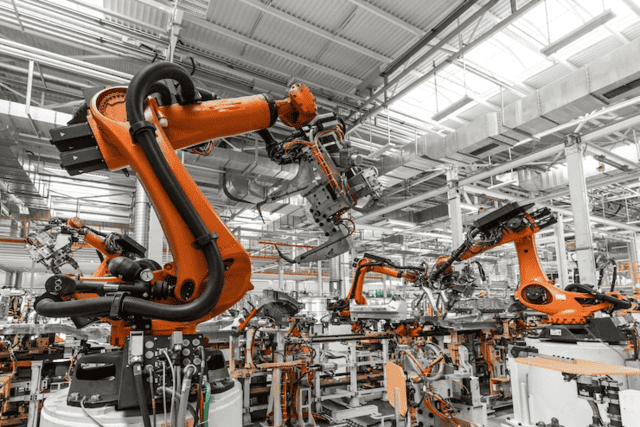
Precision, speed, and flexibility for manufacturing leave assembly robots to the machines to perform the high-precision, repetitive movements required for simple tasks with pinpoint accuracy and blistering speed. Today, these kind of robotic systems are the staple workhorses of industry providing huge benefits over man power and are part of.Advantages of Assembly Robots1.Extraordinary PrecisionRobotic assemblers don't tire like human workers, nor do they make mistakes. The result is each piece is built to precise dimensions. This decreases defects and enhances product dependability which is crucial for applications like aerospace and medical device production. Also, robots can work 24/7, which is able to considerably increase productivity with lower cycle times.2.Cost-efficiencyWhile robots are expensive to buy and implement, the cost can be justified in terms of labor savings, waste savings and increased throughput. Furthermore, robots improve workplace safety by performing safety sensitive operations, thus reducing the number of accidents.Current ApplicationsThe assembly robot is a common feature in many different industries. Welding, bolting and attaching parts in the car industry, this job has to be done with perfect precision as millions on millions car are built within no time. Robotic machines are used by electronics manufacturers to position minuscule components on circuit boards with a precision of a micron, an assignment that is nearly impossible for human hands. In a food and beverage 3 industry, robotic arms are used to package and sort food and beverages safely while maintaining cleanliness and meeting stringent standards.There is big potential for assembly robots beyond factory production, like custom-furniture assembly and even 3D-printed construction. Collaborative robots, which are engineered to work alongside humans, are becoming more popular in shops where flexibility and usability are important.Selecting the Most Suitable Assembly RobotFirst, manufacturers need to consider the necessary payload and range of motion, smaller robots work well for delicate tasks such as electronics assembly, whereas larger robots are typically used for heavy-duty tasks. Both are also important and the faster robot is good for high-product production while a slower, more accurate robot is better for detailed work.Programming flexibility is another factor. Other robots follow pre-written commands, and some also rely on AI and machine learning to adjust to real-time variability. They should also check out possible integration with available machines and software. Finally, the budget and anticipated return-of-investment are also deciding factors.The Future of Assembly RobotsThe future for automation in assembly robotics is well on track for revolutionary trends. With the emergence of AI and IoT, the robotics will become smarter as they will be able to perform preventive maintenance and self-optimization. Improved gripper tech and tactile sensors will mean robots are dealing with delicate or asymmetrical objects better.One of the other exciting trends is the emergence of mobile assembly robotics that can move around the factory floor without human intervention, dynamically reconfiguring their jobs based on changing production requirements. Moreover, as robotics continue to decrease in cost, small and medium sized businesses will begin to implement automation, putting advanced manufacturing technologies in the hands of more and more people.Eventually, fully autonomous smart factories might be the standard and robots talk to each other, self-optimize production processes and are employed to the least degree possible. As sustainability becomes a key priority, energy-efficient robots running on renewable sources of energy will continue lowering the ecological impact of production.ConclusionAssembly robots are changing the face of modern manufacturing through the relentless pursuit of precision, throughput, and safety. They are used in various fields, from the automotive industry to computer electronics, and can do more and more since technical progress is made. Companies have to consider several important factors in order to find the robot that suits their application best. In the long term, AI-enabled adaptive robotics will open even more doors to a new industrial era both smarter and more automated. Those machines are not only going to grow production, they're going to completely recast the very definition of what work even means in the manufacturing sector.

Ceuta: The Spanish Territory in North Africa
A small sliver of land on the north coast of Africa, Ceuta is one few remaining remnants (along with another Spanish enclave there and some islands off Morocco) from centuries when Europe's reach extended into Africa. A castle in the desert, Ceuta steeps itself not just in its geographical splendor but also a cacophony of cultural influences which all together had been woven through centuries into an autonomous city.Location of CeutaCeuta is on the Strait of Gibraltar, sharing a 6.4-mile border with Morocco to its south and east, while facing Spain across the sea to its north; it also lies near European transshipment routes for many sub-Saharan migrants that have climbed over or swum into Ceuta from May 2001 through August 2015. The enclave measures just 18.5 square kilometers, so it is one of the smallest territories in Spain. Ceuta, due to its location is rather small but that´s no less strategic which explains the many empires who wanted Ceuta.History of CeutaCeuta has a long and turbulent historical past. This city, which was founded by the Phoenicians and later became a Roman colony. Subsequently (and over the next 230 years), it was seized by vandals, who were then followed by the Byzantines before coming under control of Islamic Umayyad dynasts. It became an important center of trade and culture under the Moorish domination. The Portuguese gained official control over Ceuta in 1415, through the Reconquista, though it was taken by Spain from Portugal in 1580 and never again returned to its original owner.Ceuta became a Spanish territory after the signing of Treaty of Fez with Morocco in 1906. This makes Spain, the Spanish Government as an essential part of Western Europe convicted country Ceuteser colony. The outcome has been a specialization: Ceuta is not only Europe's doorstep, but also sparks controversy regarding international relations between Spain and Morocco.Culture of CeutaIn terms of culture, its aesthetic is an amalgamation of Spanish, Moroccan and Andalusie. Official languages are Spanish and Tarifit, which belongs to the Berber group of dialects indigenous in Rif. Similarly, the architecture of Ceuta shows this mix with an old town (the, in the typical Moroccan style) and new areas having European influences.Ceuta is an economic free port that no duties of any kind are performed, as well reflects business and trade from around the world. Given the unique position of Schengen, it is also an essential crossroads in Europe for imports and exports between both continents. A tourism hub, the city enjoys a popular seaside and offers historical locations while also serving as unique Spanish exclave in Africa.But Ceuta, which is a Spanish territory on the north coast of Africa, has faced its share of problems. Its border with Morocco has long been a source of tension, and frequently the focus of disputes over migration and smuggling. In modern times, Ceuta has presented a special challenge but it is also prove of an implicit policy in which Spain remains one finger on Africa with Tanger as nowadays the gateway to EuropeConclusionTo conclude, Ceuta is a unique example of the interplay between history, geography and culture in shaping an unusual territory. Eladio attests that hindsight is powerful: The fact that Ceuta remains a Spanish city in North Africa today upon reflecting shows the power of history, and, by default, it makes international politics so complex. Ceuta sits on a sprawling continent, where humanity and history are at large even within the rigid boundaries of territory — ever in flux as she made more so.

Step by Step Instructions to Wear a Wig
Wigs, as a fashion and practical accessory, are increasingly being used by people.However, wearing a wig is not a simple matter and requires a certain amount of skill and patience. This article will detail the steps and precautions on how to wear a wig.1.Choose the right wigIt is pivotal to pick the right hairpiece. In the acquisition of hairpieces, you need to pick as per your head type, hair quality, hairdo and different variables. By and large, material of hairpieces can be isolated into two classes: fake hair and genuine hair. The upside of counterfeit hair is that it is not difficult to deal with and the cost is generally low; The benefit of genuine hair is that it is more normal and sensible, yet the cost is higher. While picking, you can make compromises in light of your requirements and financial plan.2.Prepare tools and hairBefore wearing a wig, you need to prepare some necessary tools and hair. Tools include combs, hair clips, small black clips and gloves; When it comes to hair, you need to make sure your hair is clean, dry and oil-free. If the hair is relatively long, it is recommended to cut it short first, so that it is easier to care and wear the wig.3.The steps of wearing a wigPut the wig on your headFirst, put the wig on your head, making sure it fits your own hair. Be careful not to pull the wig too hard, so as not to damage or cause discomfort to the scalp.Adjust the wig positionAfter putting on the wig, you need to adjust its position. Use a comb or your fingers to gently comb the wig so it blends in more with your own hair. At the same time, pay attention to adjusting the Angle and position of the wig to make it look more natural.Secure with bobby pinsIn order to prevent the wig from falling off or shifting, hair clips can be used to secure it. When fixing, be careful not to pull the hair excessively, so as not to cause pain or damage.Tidy up the detailsFinally, tidy up the details of the wig. Check if there are warped or uneven areas, and use a comb or fingers to gently comb it to make it look more natural and realistic.

Winter Car Care: Essential Maintenance Tips for Keeping Your Vehicle Safe and Reliable
Winter is a challenging time for both drivers and their vehicles.Cold weather, road salt, and ice can take a toll on your car if it's not properly maintained. As such, it's crucial to take extra care of your vehicle during the winter months to ensure its safety and performance. Here are some essential tips for maintaining your car during the winter:Check the battery: Cold temperatures can reduce your battery's power, so it's essential to have it tested to ensure it's in good condition. If your battery is more than three years old, it's a good idea to consider replacing it to prevent unexpected breakdowns.Inspect the tires: Proper tire maintenance is crucial for safe winter driving. Check the tire pressure regularly, as cold temperatures can cause it to decrease. Also, ensure that your tires have enough tread depth to provide sufficient traction on snowy and icy roads. Consider switching to winter tires for improved grip and handling in cold conditions.Change the oil: Cold weather can cause your engine oil to thicken, making it more difficult for the engine to start. Consider switching to a winter-grade oil that flows more easily at low temperatures. It's also essential to stick to the manufacturer's recommended oil change intervals to keep your engine running smoothly.Test the lights: Days are shorter in the winter, so it's critical to make sure all your vehicle's lights are working correctly. This includes headlights, taillights, turn signals, and brake lights. Proper lighting not only helps you see better in low-light conditions but also makes your vehicle more visible to other drivers.